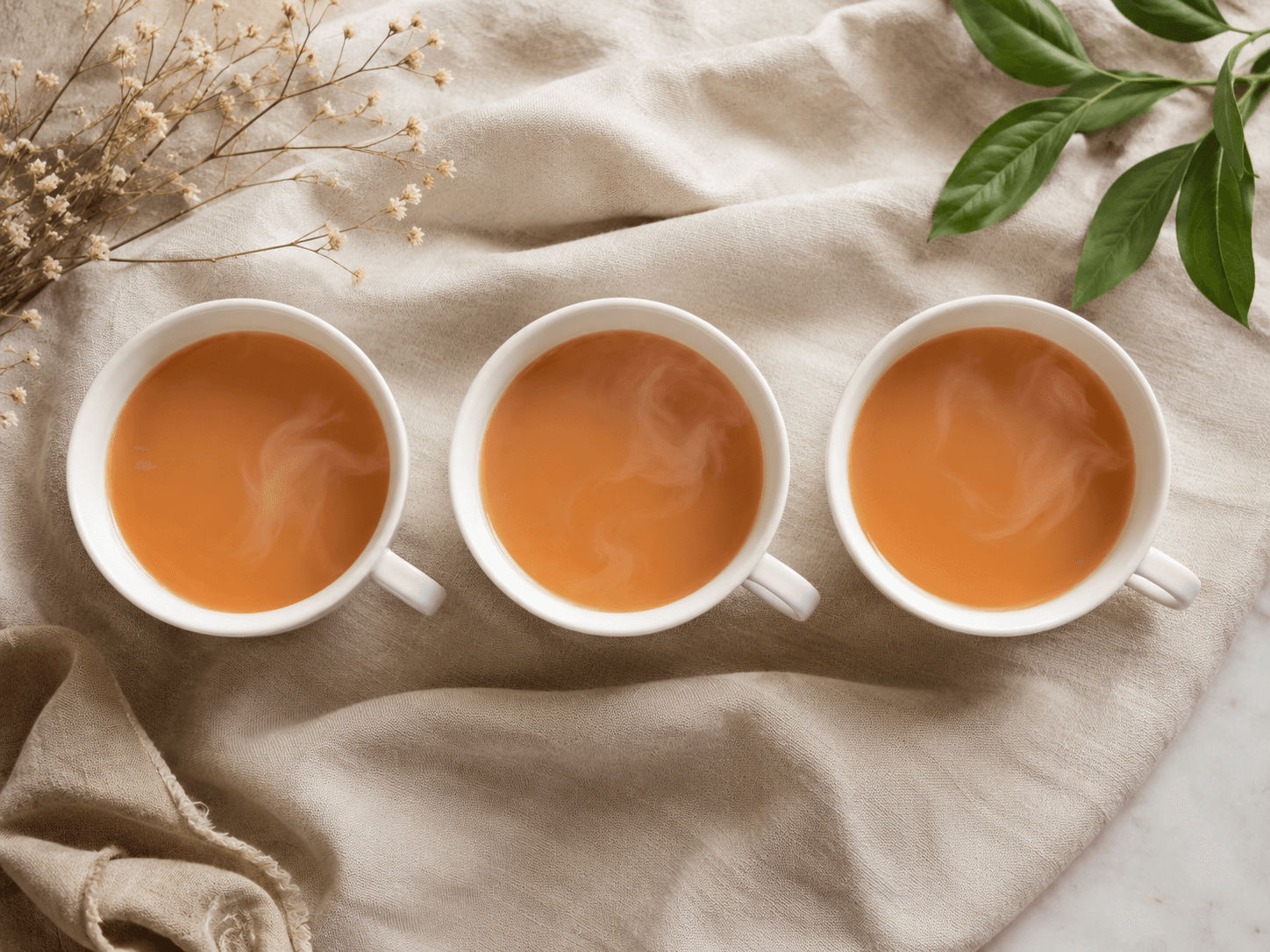
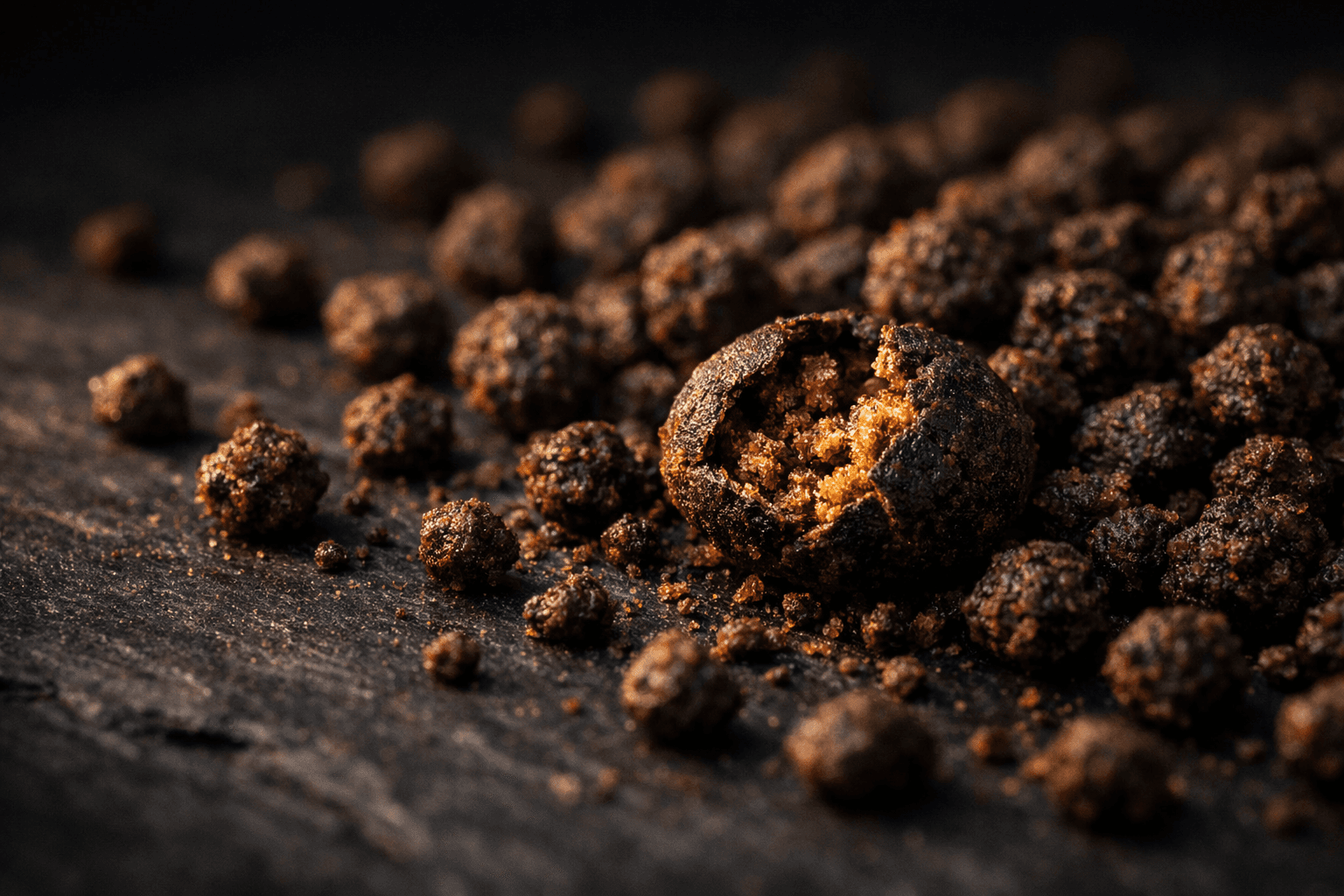
CTC tea is the backbone of India's tea culture. The name CTC stands for Crush, Tear, Curl, which describes the mechanical process used to produce small, uniform tea granules from fresh tea leaves. Unlike orthodox tea which preserves the whole leaf, CTC processing creates dense pellets that brew quickly and produce a strong, full-bodied liquor with deep colour.
Assam in northeastern India is the largest producer of CTC tea in the world. The region's unique climate, with its hot and humid conditions, fertile soil, and heavy rainfall, creates the perfect growing environment for the Camellia sinensis var. assamica plant. This variety naturally produces bold, malty flavours that are ideal for CTC processing.
How CTC Tea Is Made
The CTC manufacturing process involves three main steps. First, the fresh tea leaves are crushed between cylindrical rollers to break down the cell walls and release the natural juices. Then the crushed leaves are torn into smaller particles. Finally, the particles are curled into tight balls or pellets through rotating machines. After this, the tea undergoes oxidation, where enzymes in the leaf react with oxygen to develop the characteristic dark colour and robust flavour. The oxidised tea is then dried to lock in the flavour and reduce moisture content.
Why CTC Tea Is Perfect for Indian Chai
What makes CTC tea so popular for Indian chai is its quick brewing time and strong extraction. When you add CTC granules to boiling water or milk, they release colour and flavour almost immediately. This makes CTC tea perfect for the traditional Indian method of boiling tea with milk, sugar, and spices. Orthodox tea, by contrast, requires steeping in hot water and is better suited for drinking without milk.
Kitaya CTC Tea: Sourced from Upper Assam
At Kitaya Industries, our Assam CTC tea is sourced directly from select gardens in upper Assam, where the soil and climate produce the boldest flavours. Every batch is tasted by our master tea tasters before it reaches your cup. Whether you choose Kitaya for your daily chai or TeaGate for a more refined experience, you are getting 100% authentic Assam CTC tea with no blending or mixing.
How to Choose the Best CTC Tea
For those looking to buy CTC tea online, the key things to look for are the origin (Assam is the best for CTC), the grade (BOP and BP are common grades indicating different granule sizes), FSSAI certification for food safety, and the manufacturing date for freshness. A good quality CTC tea should produce a deep reddish-brown liquor with a strong aroma and no bitterness when brewed correctly.