India produces two teas that are famous across the world: Assam tea and Darjeeling tea. Both come from the same country, but they are grown in completely different regions, processed differently, and produce an entirely different cup. If you have ever wondered which one is right for you, this guide breaks down every difference.
Where They Come From
Assam tea is grown in the Brahmaputra river valley in northeastern India, one of the largest tea-growing regions in the world. The low-lying plains, tropical heat, and heavy monsoon rainfall create conditions that are ideal for producing a bold, high-yielding crop. Most of the tea gardens in Assam sit at altitudes below 100 metres above sea level.
Darjeeling tea, by contrast, is grown high in the Himalayan foothills of West Bengal, at altitudes ranging from 600 to 2,000 metres above sea level. The cool mountain air, mist, and slower growth rate produce a delicate leaf that develops complex floral and muscatel flavour notes that are unique to Darjeeling.
The Taste Difference
This is where the two teas are most clearly different.
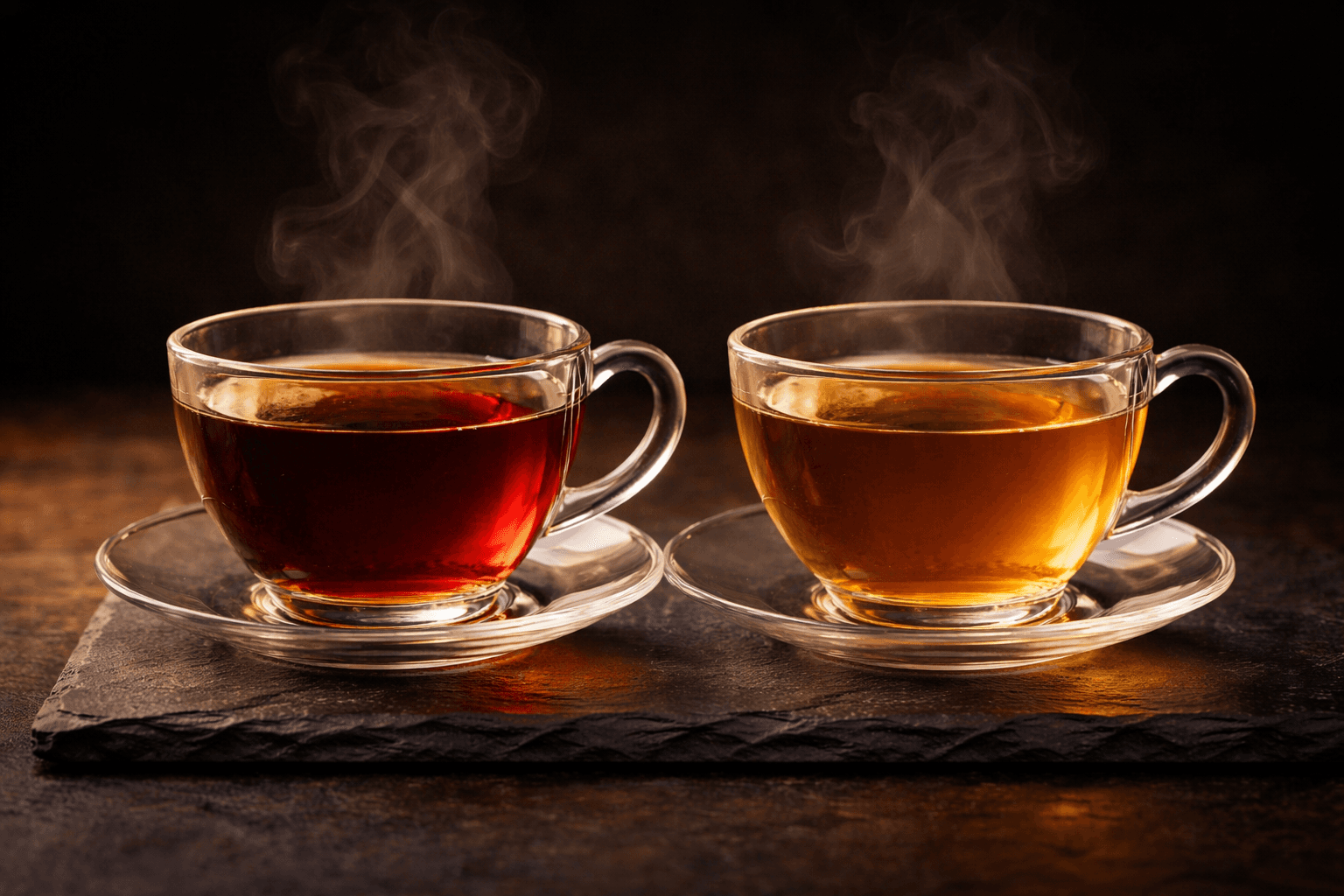
Assam black tea has a bold, malty, robust flavour with a deep reddish-brown liquor and a natural briskness. It is strong, full-bodied, and holds its character even when milk and sugar are added. This is exactly why Assam CTC tea is the foundation of Indian chai. The tea does not get washed out by milk. It gives you that kadak, strong cup that most Indian chai drinkers prefer.
Darjeeling tea has a lighter, more delicate flavour with floral, fruity, and sometimes muscatel notes that are best appreciated without milk. First flush Darjeeling (the first harvest of the year) is especially light and aromatic. Second flush Darjeeling is slightly more robust but still much lighter than Assam.
CTC vs Orthodox Processing
Most Assam tea, including Kitaya and TeaGate, is processed using the CTC method (Crush, Tear, Curl), which produces small, uniform granules that brew quickly and give maximum extraction. This makes Assam CTC tea ideal for boiling with milk in the Indian chai style.
Most Darjeeling tea is processed using the orthodox method, which preserves the whole or broken leaf. Orthodox tea is steeped in hot water like a traditional loose leaf tea, not boiled in milk. The flavour compounds in Darjeeling tea are more volatile and would be destroyed by boiling.
Which Is Better for Chai?
For everyday Indian chai, Assam CTC tea is the clear choice. The bold flavour, strong extraction, and ability to cut through milk make it the standard across India. Every major chai brand, from street stalls to packaged tea companies, uses Assam CTC as the base.
For those who prefer drinking tea without milk, or who want to explore the nuanced world of single-origin teas, Darjeeling is worth exploring. First flush Darjeeling is one of the most celebrated teas in the world and commands a significant price premium.
Price and Availability
Assam tea is widely available across India at accessible price points. Kitaya Industries offers Assam CTC tea starting at Rs 99 for 250g, making high-quality Assam tea affordable for daily consumption. Darjeeling tea is significantly more expensive due to limited production volumes, strict GI (Geographical Indication) certification requirements, and high global demand.
The Verdict
If you want a strong, satisfying chai that holds up with milk, spices, and sugar, Assam CTC tea from Kitaya is a solid choice. If you want to explore delicate, aromatic single-origin tea without milk, Darjeeling first flush is worth experiencing. Most serious tea lovers appreciate both - each for very different reasons.