The Great Indian Debate
Walk into any Indian office at 9 AM and you will find two camps: the chai people and the coffee people. Both are convinced they have the better habit. Both are partially right.
This is not an anti-coffee article. Coffee is genuinely excellent. But chai, especially a well-brewed cup of Assam black tea, has some significant advantages that coffee drinkers rarely hear about.
A standard cup of chai made with 1 teaspoon of Assam CTC tea contains approximately 40 to 70 mg of caffeine. A standard cup of filter coffee contains 80 to 120 mg. Espresso can be 150 mg or more.
Caffeine: Chai Wins for Sustained Energy
The lower caffeine in chai is not a weakness, it is a feature. Here is why.
Coffee delivers a sharp caffeine spike within 30 to 45 minutes of drinking. This is great for an immediate boost but often followed by a crash 2 to 3 hours later. Many coffee drinkers chase this cycle through the day, eventually affecting sleep quality.
Chai's lower caffeine, combined with a compound called L-theanine naturally present in black tea, tends to produce a smoother, less spiky energy curve than coffee's higher dose alone.
If you find coffee too intense, chai's lower, steadier caffeine is worth trying as an alternative. Anyone with a diagnosed condition like anxiety or a heart issue should talk to a doctor about caffeine generally, rather than treat any one drink as the fix.
Antioxidants: Both Are Excellent, Different Types
Both chai and coffee contain antioxidants, but different compounds.
Black tea contains:
- ◆Theaflavins and thearubigins, formed during CTC processing of Assam tea
- ◆Catechins
- ◆Flavonoids linked to heart health
Coffee contains:
- ◆Chlorogenic acids
- ◆Polyphenols
- ◆Melanoidins, from the roasting process
Neither is clearly superior. If you drink both, you are actually getting a wider range of antioxidants, though most people have to pick one for practical reasons.
Digestive Health: Chai Has the Edge
Coffee is known to increase stomach acid production, which is why many people with a sensitive stomach find it uncomfortable on an empty stomach. This is also why many South Indians traditionally drink filter coffee after breakfast, not before.
Chai, particularly when brewed with cardamom, fennel, or ginger, draws on spices with a long history in Ayurveda and Indian home remedies for supporting digestion, though this is traditional use rather than a clinically proven effect.
If coffee tends to upset your stomach, chai is worth trying as a gentler alternative. If digestive symptoms are persistent or severe, that is worth raising with a doctor rather than solving with a drink choice.
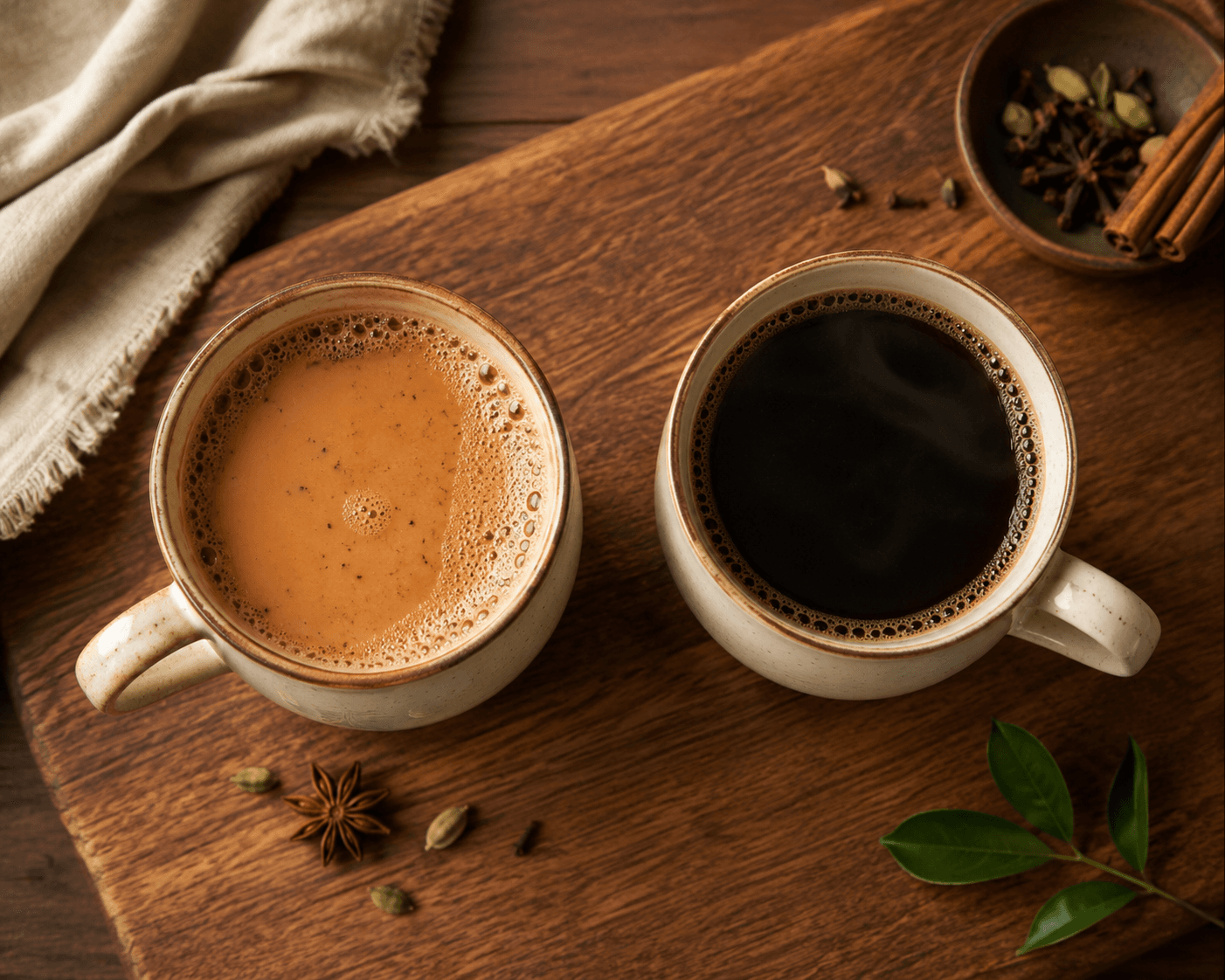
Chai vs Coffee: a daily choice that affects your health
Bone Health: A Note for Heavy Tea Drinkers
Black tea contains oxalates, which in very high quantities can reduce calcium absorption. This is generally only a concern if you drink more than 5 to 6 cups of strong tea per day over many years.
For normal consumption of 2 to 3 cups per day, this is not a meaningful risk for most people.
The practical advice: drink your chai a bit away from calcium-rich meals and you have nothing to worry about.
Sleep: Coffee's Higher Caffeine Has More Impact
If you drink chai or coffee within 6 hours of bedtime, both will affect your sleep, caffeine is caffeine. But coffee's higher caffeine content per cup means the impact is typically larger.
If evening coffee is disrupting your sleep, switching to a lighter-brewed cup of Assam tea in the evening is a reasonable thing to try.
The Verdict
For most Indians, chai is the gentler daily habit: comparable energy without the same sharp crash, spices with a long history of traditional digestive use, and less impact on sleep if taken earlier in the day. Coffee remains excellent for occasional high-performance moments.
The best approach: make chai your daily base and reserve coffee for days when you genuinely need the extra intensity.
If you want to explore what good Assam chai actually tastes like, try Kitaya Assam Bold Black Tea or the premium TeaGate Assam Premium Tea.
You can also read our guide on how much tea to drink per day to find the right daily intake for your lifestyle.
Try the Tea We're Talking About
100% Assam origin, FSSAI certified, delivered across India.